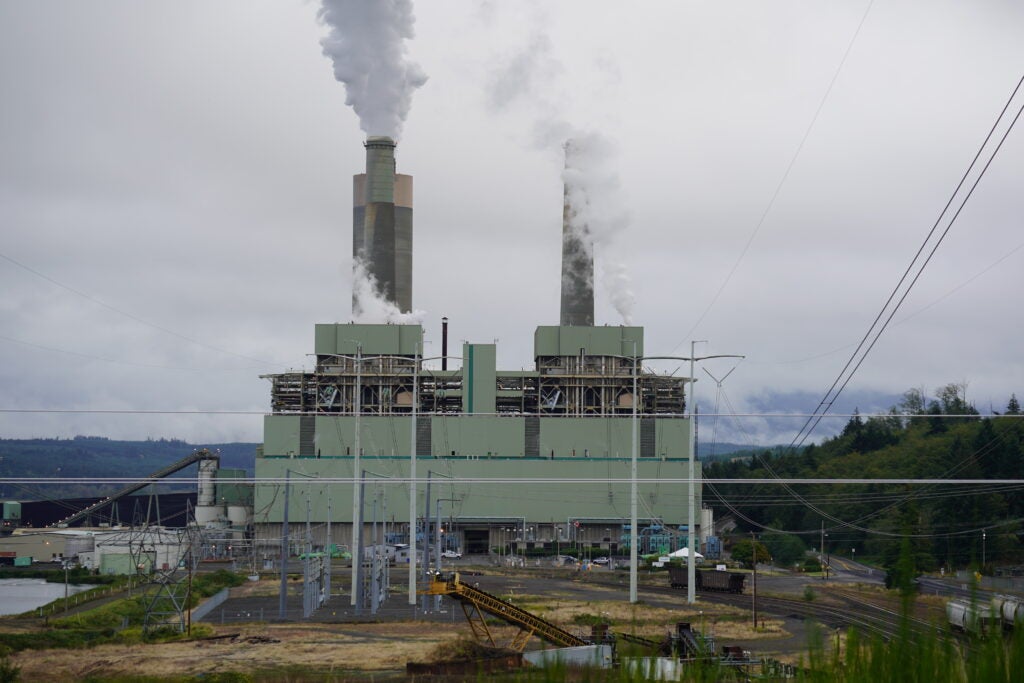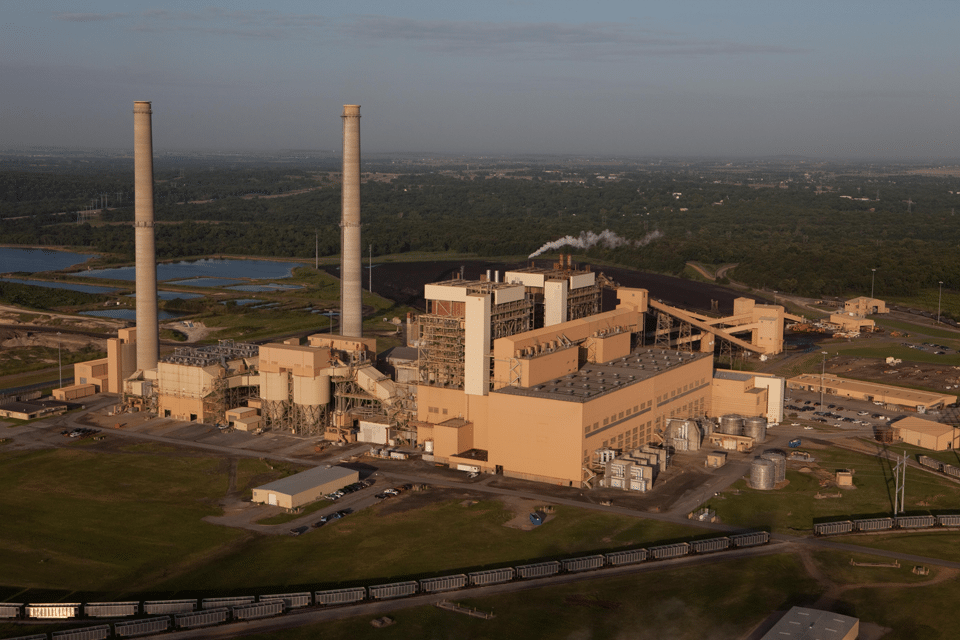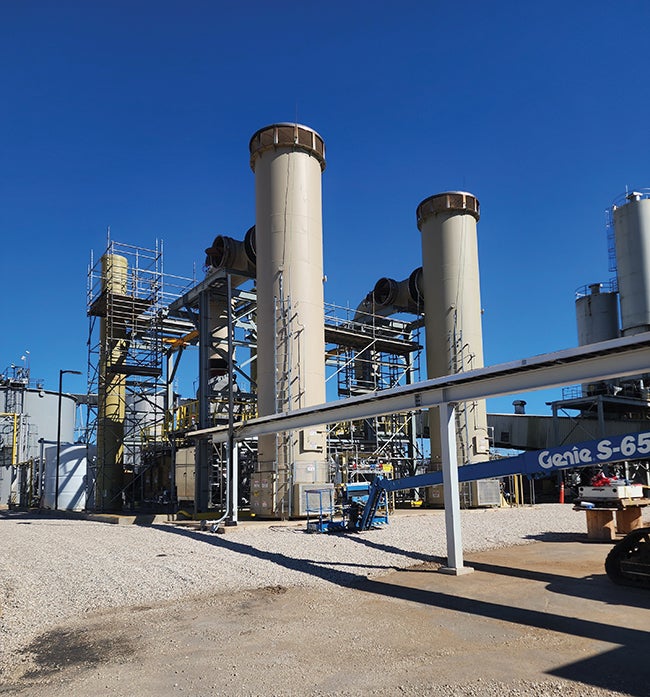
The D.C. Circuit Court of Appeals has ruled against the Trump administration’s order to keep the J.H. Campbell coal-fired power plant in Michigan operating. The decision could impact other orders that have been issued to keep U.S. power plants operating past their scheduled retirement dates.
The court on September 11 said the U.S. Dept. of Energy (DOE) does not have the authority to prevent the retirement of power plants, ruling the DOE’s justification for its emergency orders is unlawful. The court said keeping a power station online absent an imminent need to do so does not qualify as justification.
The section of the Federal Power Act—Section 202(c)—that allows emergency orders “is essentially a narrow, last-resort backstop,” Appeals Court Judge Cornelia Pillard wrote for a unanimous three-judge panel. Pillard wrote that by reversing the Campbell plant’s “long and carefully planned retirement … the results are disruptive.” The judge added that there was “no ‘emergency’ within the meaning” of the statute.
The Michigan case is one of several legal challenges to the Trump administration’s use of emergency orders to force coal-fired and other power plants to remain online. Energy Secretary Chris Wright has repeatedly said the orders are needed to maintain electricity reliability, and recently said, “Taking reliable generation offline compromises energy reliability and needlessly raises energy costs for Americans.” Critics, though, have said the orders are raising electricity prices, and adding air and water pollution that could otherwise have been avoided.
Prior to last year, the DOE in its nearly 50-year history had never ordered U.S. power generating units to continue operating after their scheduled retirement dates.
A DOE spokesperson in an emailed statement wrote that “The Energy Department’s emergency orders, including at Campbell, prevented blackouts and likely saved hundreds of lives during peak capacity events this past year,” citing Winter Storm Fern—which impacted 34 states in January of this year—as an example. “The Department of Energy will continue to protect and defend energy security for all Americans,” the spokesperson wrote. The agency could appeal the decision.
Michigan Attorney General Dana Nessel in a statement praised Friday’s ruling. “My office has been fighting this unlawful political stunt at every turn, and this ruling proves what we have been saying all along: this administration does not get to invent fake emergencies to bypass the rule of law against the best interests of Michigan residents,” Nessel said. “We remain committed to fighting these nonsensical orders and protecting our ratepayers.”
‘Rebuke’ to Trump Administration
Pillard in writing the opinion for the court said, “Our reading of the text, structure, and history leaves us unpersuaded by DOE’s sweeping conception of its ‘emergency’ authority. The Department’s [DOE’s] position would empower it to pick its preferred power sources in Michigan—or, presumably, any other state—and order them to operate without regard to the multiple procedural and substantive constraints built into state reliability planning processes.” Chief Judge Sri Srinivasan and Judge Robert Wilkins joined Pillard in the unanimous decision. Legal analysts said the ruling would lay the groundwork for how other courts could respond to challenges to emergency orders (including three others before the D.C. Circuit) requiring coal-fired and other power plants across the country to remain online.

“It is the states—informed by federal, regional, and load-serving entities’ assessments of available supply and reliability needs—that bear the responsibility to plan for and avert reliability risks on an ongoing basis,” the court wrote in its decision, noting that both the Michigan Public Service Commission and the Midcontinent Independent System Operator, which oversees the Michigan grid, had approved the plant’s retirement after lengthy reviews.
“The court rebuked the Trump administration’s abuse of emergency powers,” said Michael Lenoff, Earthjustice attorney. Earthjustice was among several groups, including the Sierra Club and Urban Core Collective, challenging what they called the DOE’s illegal application of Section 202(c) of the Federal Power Act. Earthjustice is representing public interest groups challenging the DOE orders, which have been issued to six U.S. power plants in five states.
“The DOE needs to stay in its lane and use its emergency powers only in actual emergencies,” said Lenoff. “Preventing the market-driven retirements of coal plants to advance a coal-friendly agenda is not a proper use of emergency powers. We will continue to challenge unlawful orders if DOE persists in issuing them.”
Plant Operator Reviewing Decision
Consumers Energy, the owner of the 1.5-GW Campbell plant, said it was reviewing the court’s ruling. The utility in a statement wrote, “While that happens, we are continuing to comply with the current 90-day Department of Energy order that keeps the Campbell plant operating. Ultimately, we will follow the law and work to ensure that everyone who benefits from power from the Campbell plant across the Midwest pays their fair share.”
Frank Sturges, senior attorney at Clean Air Task Force (CATF), in an emailed statement to POWER wrote, “DOE’s order to keep the aging, uneconomic, and polluting Campbell plant running was a misuse of power, and the D.C. Circuit was right to strike it down. Despite the agency’s claims that the unreliable plant was ‘essential’ to addressing a supposed emergency, there was no evidence to support that assertion. There is, however, clear evidence that retiring the plant will deliver public health and economic benefits to Michiganders without compromising electricity supply.”
Sturges continued: “As the court recognized, ‘the coordinated, years-long process’ for the Campbell plant’s retirement included plans to replace the plant’s generation with cleaner sources. In addition, CATF estimated its closure will save up to $1 billion on health costs and save nearly 70 lives annually in Michigan alone. As the court ruled, the order depended on ‘DOE’s misconception of the nature and scope of its emergency authority,’ and the court made clear DOE’s unjustified use of its emergency authority is ‘disruptive’ and ‘upends’ careful decisions reached after years of input and expert analysis. With this ruling, it is now past time for DOE to end its unjustified emergency orders keeping fossil units slated for retirement online.”
The Circuit Court in its decision wrote, “Contrary to DOE’s position … the complexity and advance planning that go into states’ assurances of resource adequacy do not imply that DOE must have vast, top-down emergency power to pick its favorite generators to run at all costs. The Department’s reading of ‘emergency’ invites frequent federal interventions that are unsupported by the statute and threaten the stability of the energy market.”
Adequate Power Generation Capacity
Petitioners in the Campbell case have pointed to grid operator data that suggests regions served by the Michigan plant, and by other stations ordered to remain online, have adequate power generation capacity to serve load projections through at least May 2027. The groups said that data undercuts the premise of DOE’s asserted emergency.
DOE in supporting its orders has said its foresees electricity shortfalls due to increased replacement generation from renewable energy sources, such as solar and wind, that are weather dependent. The petitioners, though, have argued that the initial announced retirement dates for the coal-fired power plants involved have been based on more baseload power generation (such as from gas-fired power plants) entering service, even before accounting for new generation from solar, wind, and energy storage.
Derrell Slaughter, Michigan policy director, Climate & Energy, at NRDC (Natural Resources Defense Council), said, “Michiganders shouldn’t have been saddled with artificially high energy bills or forced to deal with toxic air pollution over a fabricated ‘emergency.’ The Campbell coal plant is out of date, costs more to operate than other electricity generation options, and is one of the worst polluters in the state. Today’s federal court ruling has correctly rejected the Trump administration’s illegal efforts to force the Campbell plant to continue to operate.”
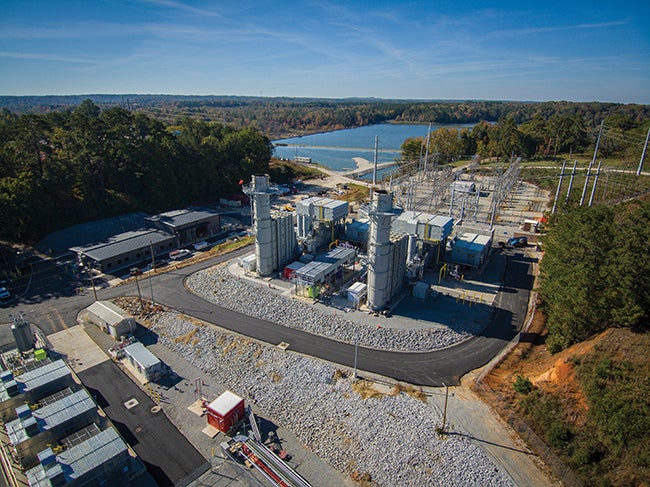
Most recently, Energy Secretary Wright on September 1 issued an emergency order requiring the Orlando Utilities Commission (OUC) to keep Unit 1 of the Stanton Energy Center, a coal-fired plant in Orlando, Florida, running through November 30 of this year. The unit had been scheduled to enter an extended cold shutdown in June 2026. The order cited grid reliability concerns as the reason for DOE intervention.
Other power plants operating under 202(c) emergency orders, in addition to the OUC and Campbell plants, are Unit 2 at TransAlta’s Centralia plant in Washington state; Craig Unit 1 in Colorado, run by Tri-State Generation and Transmission Association; CenterPoint Energy’s F.B. Culley Unit 2 in Indiana; Units 17 and 18 at Northern Indiana Public Service Co.’s R.M. Schahfer plant in Indiana; and Units 3 and 4 at Constellation Energy’s Eddystone plant in Pennsylvania. The Eddystone units run on natural gas or oil; all the other facilities burn coal.
Court Rules DOE Overreached
The court’s ruling on Friday said the DOE cannot invoke Section 202(c) of the Federal Power Act unless it establishes a genuine emergency, which has been defined in the Code of Federal Regulations “as an unexpected inadequate supply of electric energy which may result from the unexpected outage or breakdown of facilities for the generation, transmission or distribution of electric power.” The D.C. court said that the federal government may not override what it called “well-established long-term planning processes” to force power plants to continue to operate. The court said such decisions, including management of supply and demand of power on a day-to-day basis, belong to utilities and grid operators. Those challenging the orders said there is no evidence that continued operation of the Campbell plant, along with the other plants operating under emergency orders, is imminently needed.
“Today’s ruling is a victory for families across the Midwest who are tired of paying to keep this old, expensive, and dirty power plant online,” said Sierra Club Chief Appellate Counsel Sanjay Narayan. “Instead of working to lower costs and clean up our air and water, the Trump administration has been pulling out all the stops to try to bolster dirty and expensive fossil fuels—at public expense. This reckless agenda will not succeed. We will continue to hold the Department of Energy accountable to the law, and ensure that the J.H. Campbell plant finally retires as it was scheduled to, and we will continue to fight back against the other illegal extensions across the country.”
Multiple Emergency Orders
The DOE in May 2025, citing Section 202(c) of the Federal Power Act, issued an order calling for the Campbell power plant to remain operational, just days before it was due to retire at the end of that month. The emergency order, valid for 90 days, has since been re-issued six times for the Campbell plant by the DOE. The costs of operating the coal plant for the last year exceeded $248 million in June 2026, according to Consumers Energy’s SEC filings, a cost of $642,000 per day. The operators have said that at no point over the past year was the generation from the power plant needed to support the grid.
Earthjustice, the Sierra Club, NRDC, Environmental Law and Policy Center, CATF, and Environmental Defense Fund represented a large public interest coalition that petitioned the court to set aside DOE’s order forcing the Campbell coal plant to operate. The states of Michigan, Minnesota, and Illinois also petitioned the court.
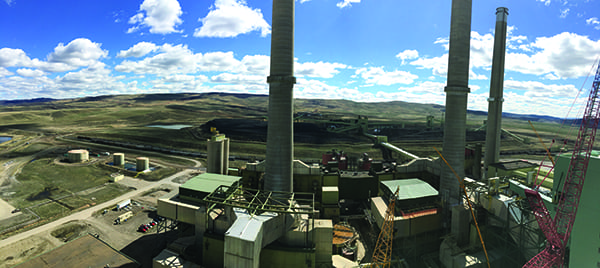
Unit 1 at the Craig Station in Colorado, whose operator Tri-State Generation and Transmission Association received a DOE order to remain online in December of last year, provides an example of the costs to keep an older plant operating past its scheduled retirement. Tri-State earlier this year said that, on average over the past 10 years, it costs about $13 million a year to operate and maintain the Craig facility, not including the cost of buying coal.
Xcel Energy, which owns 10% of Craig Unit 1, recently said it cost the utility $4 million to keep the plant online during the first six months of 2026, though the unit produced little energy. Data from the U.S. Energy Information Administration (EIA) shows that from January to June 2026, Craig Unit 1 only produced power in April; the EIA said Units 2 and 3 at Craig produced more than 20 times as much electricity as Unit 1 during those six months.
—Darrell Proctor is a senior editor for POWER.