
Legal & Regulatory
-
 Commentary
FERC Approves MISO Interconnection Queue Reforms, Rejects Overall Queue Cap
The Federal Energy Regulatory Commission on Jan. 19 approved most of the Midcontinent Independent System Operator’s (MISO) proposed revisions to its Generator Interconnection Procedures (GIP) designed to reduce the submission and negative impacts of speculative interconnection requests. The changes apply prospectively, starting with the DPP-2023 queue cycle, which has not yet entered the Definitive Planning […]
-
 Legal & Regulatory
Interconnection Cost-Causer-Pays Model: Is It Fair or Antiquated in the Era of Grid Modernization
The transition to green energy is often seen through two different lenses: a burden or an opportunity. Grid modernization refers to a comprehensive transformation of the traditional power grid to upgrade aging infrastructure to enhance reliability, resilience, efficiency, and sustainability of electricity generation, transmission, distribution, and consumption. A key element of grid modernization is designing […]
-
Legal & Regulatory
Bipartisan Senate Bill Seeks to Rein In DOE Distribution Transformer Efficiency Standards
A bipartisan group of 12 U.S. senators on Jan. 18 introduced a bill that could freeze the Department of Energy’s (DOE’s) implementation of updated energy efficiency standards for distribution transformers. The Distribution Transformer Efficiency and Supply Chain Reliability Act of 2024 (S.3627) would establish new limitations on federal efficiency rules for specific distribution transformers. Several […]
-
 Hydrogen
DOE Selects Consortium to Bolster Demand for Regional Hydrogen Hubs
The Department of Energy (DOE) has selected a consortium that will work to foster demand for commercial clean hydrogen at seven regional hydrogen hubs (H2Hubs), which the agency in October 2023 selected to receive $7 billion in federal funding. The Hydrogen Demand Initiative (H2DI) consortium will be tasked with designing and implementing demand-side support mechanisms, […]
-
 Commentary
How PG&E Almost Became the Nation’s Largest Cooperative
The history of electric cooperatives is one of individuals striving to improve their local communities. Perhaps the most inspiring electric cooperative formation was initiated by Peggi Timm. Timm, whose accomplishments would fill a library, helped to create one of Oregon’s largest cooperatives, called Oregon Trail Electric Cooperative (OTEC). In 1987, OTEC’s service territory was controlled […]
-
 Legal & Regulatory
A Review of Air Quality Rules and a Look at 2024
Federal regulators in 2023 proposed a variety of new air quality rules, and 2024 is likely to see these proposals become final and enforceable. Here’s a look at the past year, and a look ahead at the major
-
 Hydrogen
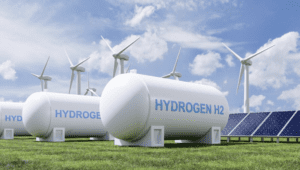
Treasury’s Proposed Clean Hydrogen PTC Rule Disappoints Power Industry
The Department of the Treasury has released proposed regulations and guidance defining a tax credit for the production of “clean hydrogen,” a significant supply-side incentive that is part of the Biden administration’s larger climate-driven policy framework. But though long-awaited, the measure has stirred up strong disappointment from the power industry. If finalized, the Treasury Department’s […]
-
 Legal & Regulatory
FERC Approves CAISO Day-Ahead Market Enhancements, EDAM Proposals
The Federal Energy Regulatory Commission (FERC) has unanimously approved the California Independent System Operator’s (CAISO’s) Day-Ahead Market Enhancements (DAME) and Extended Day-Ahead Market (EDAM) proposal, effectively allowing new market options to address challenges caused by increasing system variability and uncertainty in the West. FERC’s decision issued on Dec. 20, for the most part, accepts CAISO’s […]
-
 Commentary
Streamlining Clean Energy Approvals and Organic Waste Legislation for a Sustainable Future
In the face of escalating climate concerns, the U.S. is grappling with the dual challenges of advancing clean energy initiatives and establishing effective organic waste management strategies. A year since Congress injected substantial investments into the clean energy transition, progress has been made, but hurdles persist. Private sector interest in clean energy initiatives has surged, […]
-
 Commentary
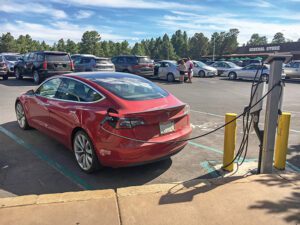
EV Fast Charging Infrastructure Isn’t Growing Fast Enough—Utilities Must Step Up to Accelerate This Critical Infrastructure Buildout
Utilities are just beginning their journeys to speed up deployment of electric vehicle (EV) charging infrastructure in reaction to increasing EV penetration. In the U.S., EV sales have risen nearly 50% between 2022 and 2023, now accounting for 8% of total industry sales (the Biden administration has a goal of 50% new vehicle sales comprising zero-emission vehicles by […]
-
 Nuclear
Nuclear’s Glimmer Ushers in Spate of Lifetime Extensions
Despite its ongoing war with Russia, Ukraine in early November gave state nuclear operator Energoatom the green light to operate Unit 1 of the South Ukraine Nuclear Power Plant for 10 more years. The approval
-
 News and Notes
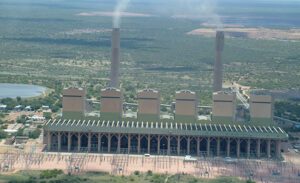
World Bank Approves $1B Loan to Advance South Africa’s Power Sector Reforms
The World Bank on Oct. 25 granted South Africa a $1 billion developmental policy loan (DPL) as a significant measure to help the country address its debilitating energy crisis, and encourage it to transition
-
 Legal & Regulatory
California Climate Bill Targets Business, Utility Emissions
New climate legislation in California, known as the Climate Corporate Data Accountability Act (SB 253), was signed by Gov. Gavin Newsom on Oct. 7. The law—the first of its kind in the U.S.—requires the
-
 Legal & Regulatory
Bolstering Power Grid Cybersecurity in an Era of Hybrid Threats
Soon after Russia invaded Ukraine in February 2022, Russian government-affiliated hackers orchestrated cyberattacks that targeted Ukraine’s electrical grid and energy infrastructure. In early March of last year, one cyberattack successfully disabled a high-voltage transmission station near Kyiv, resulting in a power outage in the capital. Later that month, another cyberattack targeted three regional electric power […]
-
 Legal & Regulatory
Wind Project Approvals, Tax Credits Look to Outpace Macroeconomic and Supply Chain Headwinds in 2024
Recent events in the wind power industry, all occurring on a single day, provide a snapshot of the sector’s challenges and opportunities heading into 2024. Ørsted, the world’s largest developer of offshore wind, on Oct. 31 announced the cancellation of Ocean Wind 1 and 2, two 1,000-MW-plus projects off the coast of New Jersey. In […]
-
 Legal & Regulatory
FERC’s Enforcement in Demand Response Case a Lesson for Utilities
For energy consumers that have flexibility to modify their energy use in response to direction from a utility or the relevant transmission operator (i.e., to reduce load by changing or rescheduling what they are doing), selling demand response (DR) can be a lucrative additional revenue stream. Depending on the location, such consumers may have multiple […]
-
 Commentary
Current Trends in Climate Change Technology Investment
As the world grapples with fast-changing weather patterns, wildfires, record-breaking heat, and many other climate-related issues, it is becoming increasingly important to develop the technologies that will help to combat climate change. There is a race to develop new technologies that can capture, remove, and store carbon, create renewable energy, improve energy management and efficiency, […]
-
 Power
PowerPOWER Digest [November 2023]
Canada Commits CA$3B to Complete Romania’s CANDU Nuclear Construction. Canada will loan CA$3 billion in available export financing to Nuclearelectrica S.A. (SNN), Romania’s state-owned operator of the
-
Legal & Regulatory
Increased Demand Is Fueling Interconnection Process Changes
Electrical system operators are seeing an increase in potential projects seeking to connect to the power grid. Ideally, this growth in application activity means that energy systems and networks will become
-
 Legal & Regulatory
Three Key Transmission Links Get $1.3B Boost With Federal Capacity Contracts
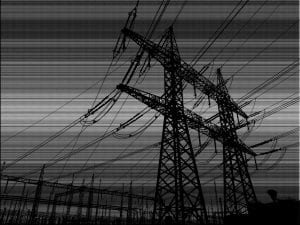
Three interregional transmission lines connecting six U.S. states will receive the first $1.3 billion tranche of $2.5 billion in federal funding designated under the Transmission Facilitation Program (TFP), a revolving fund enacted by the 2021 Bipartisan Infrastructure Act. The U.S. Department of Energy (DOE) Grid Deployment Office’s (GDO’s) first picks under the TFP, unveiled on […]
-
 Legal & Regulatory
EPA’s Expansion of Coal Ash Regulation Could Impact Beneficial Use
The U.S. Environmental Protection Agency (EPA) in May of this year issued a proposed rule that would greatly expand the scope of federal regulations governing the management of coal combustion residuals, or
-
 Commentary
Equity in Energy: How Community Solar Is Involved
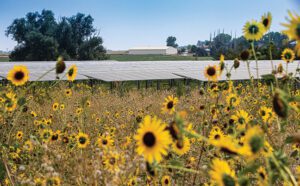
In the U.S., there has always been a direct correlation between the disparity in income and the distribution of renewable resources. Equity in energy refers to fairness in the distribution of energy, benefits, and burdens among different people and communities. It was designed to rectify historical inequalities, recognizing the need to create a fair and […]
-
 Legal & Regulatory
New Labor Regulations Could Have Implications for Renewables Developers
Developers of renewable energy projects generally haven’t concerned themselves with the Davis-Bacon Act, the Great Depression-era federal law that mandates the paying of prevailing wages to laborers on public works projects. However, if the Department of Labor (DOL) gets its way, that might soon change. On August 23, 2023, DOL published new Davis-Bacon and Related Acts regulations that contain […]
-
 Legal & Regulatory
Environmental Justice: What It Is and Why It’s Important to Power Projects
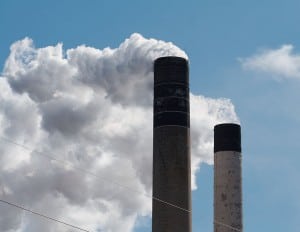
The U.S. Department of Energy (DOE) defines environmental justice as: “The fair treatment and meaningful involvement of all people, regardless of race, color, national origin, or income, with respect to the development, implementation, and enforcement of environmental laws, regulations, and policies.” It says “fair treatment” means that no population bears a disproportionate share of negative […]
-
 Legal & Regulatory
Streamlined Permitting Key to California’s Floating Offshore Wind Development
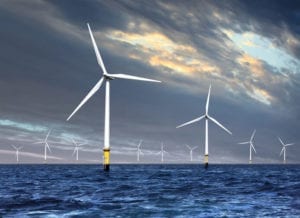
Earlier this year the Biden administration hosted its inaugural Floating Offshore Wind Shot Summit, showcasing the efforts of federal departments to work with state, tribal, industry, and other interests to
-
 Commentary
For EV Adoption, How Important Are Proposed EPA Vehicle Emissions Regulations?
The U.S. Environmental Protection Agency (EPA) in April of this year announced proposed regulations to tighten restrictions on tailpipe emissions for light and medium-duty vehicles and greenhouse gas emissions from heavy-duty vehicles beginning with the 2027 model year. In order to meet the new requirements, the proposed regulations could effectively require automakers to produce zero-emission […]
-
Commentary
FERC’s Queue Reform an Improvement, but Devil Is in the Details
The Federal Energy Regulatory Commission (FERC) on July 28 issued a landmark order that reforms the generator interconnection process. The order is in response to a clear need for nationwide improvements due to a rapidly changing resource mix, market forces, and emerging technologies for power generation. Order No. 2023, Improvements to Generator Interconnection Procedures and Agreements, […]
-
 Nuclear
Indictment of Former Westinghouse Executive Charged in Connection with V.C. Summer Nuclear Project Dismissed
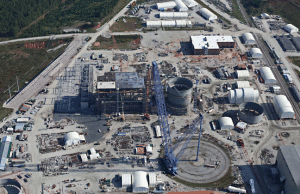
Former Westinghouse Electric Co. Senior Vice President Jeffrey A. Benjamin’s motion to dismiss for grand jury bias a federal indictment issued in August 2021 alleging he concealed damaging information concerning the V.C. Summer nuclear expansion project schedule was granted by U.S. District Judge Mary Geiger Lewis on August 2, 2023, in Columbia, South Carolina. Benjamin […]
-
 Nuclear
Two Big Nuclear Regulatory Milestones for Idaho NuScale SMR Project
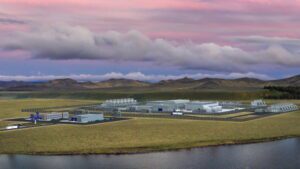
The Nuclear Regulatory Commission (NRC) on July 31 accepted a standard design approval (SDA) application for NuScale Power’s VOYGR-6, a plant design that will be featured in the 462-MWe Carbon-Free Power Project (CFPP) proposed at an Idaho National Laboratory (INL) site. The milestone comes on the same day that CFPP submitted a limited work authorization […]
-
 Legal & Regulatory
FERC Adopts ‘Historic’ Reforms to Ease Nationwide Generation Interconnection Backlog
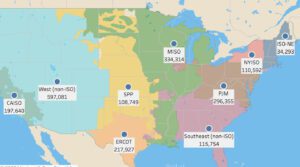
The Federal Energy Regulatory Commission (FERC) has approved key transmission reforms aimed at clearing a staggering backlog of more than 10,000 generation and storage projects—more than 2,000 GW—stalled in interconnection queues across the country. Order 2023, a final rule unanimously adopted by FERC’s four commissioners at a July 27 open meeting and posted in full […]