
Legal & Regulatory
-
 Nuclear
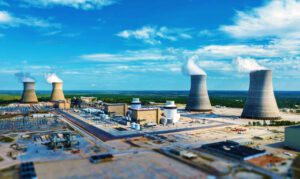
Westinghouse Files to Update AP1000 Design Certification, Make Vogtle Expansion the U.S. Reference Plant
Westinghouse has asked the Nuclear Regulatory Commission (NRC) to renew and update the design certification for its AP1000 reactor, formally proposing Vogtle Unit 4’s as‑built configuration as the new standard reference plant for future AP1000 projects in the U.S. If accepted and docketed, the submittal—Revision 20 of the AP1000 Design Control Document (DCD)—would establish “a […]
-
 Nuclear
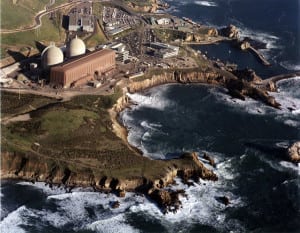
NRC Extends Operating License for California’s Diablo Canyon Nuclear Plant
The U.S. Nuclear Regulatory Commission (NRC) has approved another 20-year operating license for California’s lone nuclear power plant.
-
 Legal & Regulatory
DOE’s Section 202(c) Emergency Orders Since May 2025: 43 and Counting
Since May 2025, the U.S. Department of Energy (DOE) has issued more than 40 emergency orders and extensions under Section 202(c) of the Federal Power Act—more than in any comparable period in the past two decades. The orders have fallen into two broad categories: retirement deferrals, which compel utilities and grid operators to keep specific generating […]
-
 Legal & Regulatory
Energy Projects May Qualify for Millions in Refunds: Revisiting Project Costs After IEEPA Ruling
Renewable energy developers, independent power producers, utilities and investors have spent the past several years navigating a shifting trade environment affecting solar modules, batteries and wind components. Due to a recent U.S. Supreme Court decision, that now has changed for those who have utilized international supply chains to build their qualifying electric assets.
-
 Legal & Regulatory
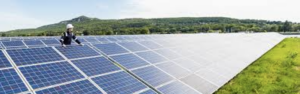
Guidance for Optimizing Solar Power Project Tax Credits
Most commercial solar projects must now meet rigorous “physical work of a significant nature” requirements to establish federal tax credit eligibility.
-
 Legal & Regulatory
Solar Power Satellites and Orbital Data Centers—International Space Law Implications
In 2011, I published an article in the Boston University Journal of Science & Technology Law examining space-based solar power (SBSP) and the issue of property rights in space, and more specifically, in geostationary orbit (GEO), under the current regime of international treaties and policies. Today, as the demand for computing power grows, that question […]
-
 Legal & Regulatory
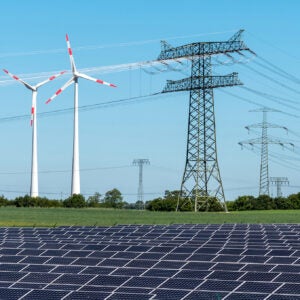
IRS Releases Guidance on Restrictions on Use of Foreign Equipment in Clean Energy Projects
The Internal Revenue Service recently issued its long-awaited guidance on how to determine whether a clean energy project uses too much equipment from Chinese or other prohibited foreign entities to qualify for valuable federal clean energy tax.
-
Legal & Regulatory
FERC: Small QFs Lose FPA Exemptions When Certifications Become Inaccurate
The Federal Energy Regulatory Commission (FERC or the Commission) on February 19 of this year issued an Order on Rehearing and Clarification ruling that qualifying facilities (QFs) that are 20 MW or smaller cannot rely on their exemption from Federal Power Act (FPA) Sections 205 and 206 during periods when their Form No. 556 certifications are outdated due to any material changes from the original certification, such as changes in upstream ownership.
-
 Data Centers
Hyperscalers Sign White House Pledge to Fund Data Center Power, Grid Upgrades
Seven of the nation’s largest artificial intelligence (AI) companies and hyperscalers signed a White House-brokered agreement March 4 committing to build, procure, or fund new generation capacity sufficient to cover the electricity demands of their data centers—and to pay for all grid infrastructure upgrades required to connect them, without passing those costs to residential or […]
-
 Legal & Regulatory
A Historic First: NRC Clears TerraPower’s Natrium Nuclear Reactor for Construction
The Nuclear Regulatory Commission (NRC) on March 4 authorized staff to issue a construction permit for TerraPower’s Kemmerer Power Station Unit 1 in Kemmerer, Wyoming—the first commercial reactor the agency has approved for construction in nearly a decade, and the first approval for a commercial non–light water reactor design in more than 40 years. The […]
-
 Legal & Regulatory
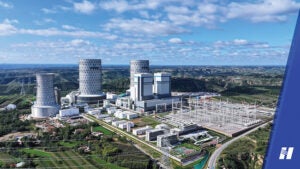
The Real Barriers to Power Sector Carbon Capture
Despite growing technical maturity, post-combustion carbon capture and storage (CCS) projects for power generation continue to face decisive hurdles. Integration complexity, financing structures, and risk
-
 Legal & Regulatory
How America’s Power Regions Chose Their Futures and How That Has Played Out
On April 24, 1996, the Federal Energy Regulatory Commission (FERC) issued Order 888, requiring all public utilities owning or operating interstate transmission facilities to file open-access
-
 Commentary
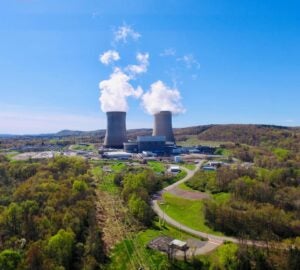
Beyond Reactors: The Full Fuel Cycle Investment Needed for a Nuclear Future
A resurgent nuclear industry cannot succeed unless the U.S. invests in the entire nuclear fuel cycle—from uranium mining to long‑term waste storage. Without strengthening this industrial backbone, nuclear power’s potential may remain more aspiration than reality.
-
 Fusion
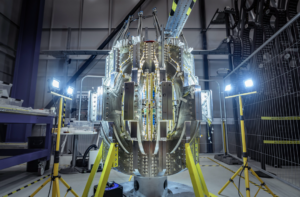
NRC Proposes First Dedicated Regulatory Framework for Commercial Fusion Machines
The U.S. Nuclear Regulatory Commission (NRC) has proposed the first dedicated federal licensing framework for commercial fusion machines, setting out a technology‑inclusive, risk‑informed approach under its 10 CFR Part 30 byproduct material rules rather than the power‑reactor framework used for fission plants. The proposed rule seeks to place regulatory oversight of fusion‑generated radioactive material within […]
-
 Finance
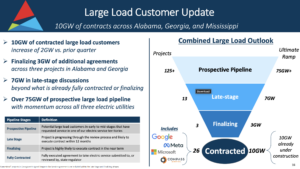
Southern Co. Lands Largest Loan in DOE History—$26.5B for Gas, Nuclear, and Grid Projects
The Department of Energy (DOE) has closed a $26.54 billion loan package—the largest single loan commitment in the agency’s history—with Southern Co. subsidiaries Georgia Power and Alabama Power to finance more than 16 GW of “firm” generation and more than 1,300 miles of transmission infrastructure and grid enhancement across the Southeast. The transaction, announced Feb. […]
-
 Research and Development
DOE Details 26 Genesis Mission AI Challenges, Targeting Nuclear Timelines, Grid Planning, and Energy Systems
The Department of Energy (DOE) has released specifications for 26 artificial intelligence (AI) challenges under its Genesis Mission that could reshape how power plants are designed, licensed, built, and operated. Several directly target nuclear plant deployment timelines, grid interconnection bottlenecks, data center load integration, fusion commercialization, and subsurface energy recovery. Launched via executive order on […]
-
 Nuclear
NRC Launches Major Reorganization as Licensing Deadlines and Reform Workload Intensify
The U.S. Nuclear Regulatory Commission (NRC), the federal agency responsible for licensing and oversight of civilian nuclear facilities, on Feb. 4 said it would launch a sweeping organizational restructure intended to consolidate decision-making authority, integrate licensing and inspection teams, and align the agency with presidential directives for accelerated nuclear technology deployment. The reorganization will create […]
-
 Legal & Regulatory
DOE Issues $2.7B Orders to Scale Domestic Nuclear LEU and HALEU Enrichment
The U.S. Department of Energy (DOE) has issued its first production-scale task orders under a $2.7-billion uranium enrichment program launched in 2024, awarding $900 million each to Centrus Energy Corp., General Matter, and Orano Federal Services to expand domestic capacity for conventional low-enriched uranium (LEU) and high-assay low-enriched uranium (HALEU) over the next decade. The […]
-
 Legal & Regulatory
Despite Federal Support, Economic Forces Are Driving the Future of Coal
The Trump administration during both its terms has prioritized its efforts on reviving the coal industry by introducing a series of policy changes and executive actions intended to boost coal leasing and production on federal lands. Yet, despite these political moves, coal’s trajectory in the U.S. energy market has followed a different path.
-
 Legal & Regulatory
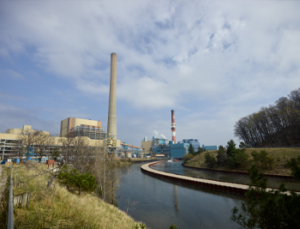
DOE Uses Emergency Powers to Freeze More Than 2 GW of Coal Retirements as Opposition Intensifies
A rapid succession of Section 202(c) emergency orders has forced utilities to keep more than 2 GW of coal capacity online in December alone, marking an unprecedented federal intervention in grid operations and triggering legal challenges from states and environmental groups. Across all orders issued since May 2025, the DOE has now stalled the retirement […]
-
 Legal & Regulatory
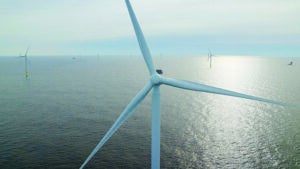
Federal Court Strikes Down Trump’s Wind Energy Moratorium
On Dec. 8, 2025, U.S. District Court Judge Patti B. Saris of the District of Massachusetts granted summary judgment against the Trump administration declaring that the Jan. 20, 2025, executive memorandum directing federal agencies to halt wind energy development (and all related agency actions to implement the memorandum) were unlawful. Wind Energy in the U.S. […]
-
 Coal
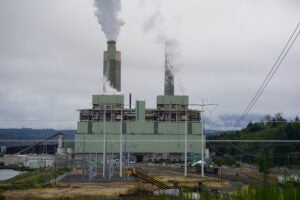
CoalDOE Orders Last Coal-Fired Unit in Washington State to Remain Online
The last coal-fired power generation unit in Washington state, scheduled to close by year-end, is the latest U.S. coal facility ordered to remain in operation by the Trump administration. The U.S. Dept. of Energy (DOE) on December 16 told TransAlta, a Calgary, Canada-based independent power producer (IPP), to keep the 730-MW, coal-fired Centralia Unit 2 […]
-
 Legal & Regulatory
Permitting the AI Boom: A New NEPA Landscape for Energy Infrastructure Projects
In the push for more efficient and streamlined permitting processes, recent changes from Congress, the U.S. Supreme Court, and the executive branch have reshaped the National Environmental Policy Act (NEPA) landscape.
-
 Legal & Regulatory
Looking Back at 2025 to Look Forward for 2026: Navigating Policy Shifts and Market Surges
The past year saw a multitude of factors driving up electricity prices, including rapid growth in electricity demand, supply chain tightness, deployment delays for transmission and production projects, and an uncertain political and permitting climate. We expect all of these trends to continue in 2026. Changing economics have turned the justification for project development in […]
-
 Legal & Regulatory
Delivering Nuclear Energy: Promise vs. Regulatory Reality
In the race to decarbonize and secure America’s energy future, nuclear power is once again in the spotlight. From advanced reactors to fusion breakthroughs, the promise of nuclear energy is clear.
-
 Energy Security
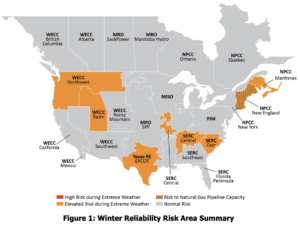
NERC: Winter Grid Reliability at Risk Amid Soaring Demand, Fuel Supply Gaps
In its recently released Winter Reliability Assessment, the North American Electric Reliability Corporation (NERC) found that while resources are adequate for normal winter peak demand, large swaths of North America face an elevated risk of electricity shortfalls during prolonged, wide-area cold snaps. Noting that four severe Arctic storms have swept across much of the continent since […]
-
 Data Centers
Early-Stage Risk Mitigation—Essential Element for Data Center Financing
Lenders and investors are scrutinizing data center projects closely. Identifying and mitigating risks early helps attract investors and reduce financing costs. Clear documentation and realistic timelines are essential to securing financing. Land Control—The Foundation of Success: Land remains the cornerstone of any data center development. Verifying land control ensures the project’s legal and physical foundation […]
-
 Energy Security
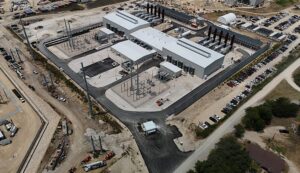
Texas Issues First Performance-Based Grant Under Energy Fund for LCRA’s New 188-MW RICE Peaker
The Public Utility Commission of Texas (PUCT) has executed its first agreement under the Texas Energy Fund (TxEF) Completion Bonus Grant (CBG) Program, awarding the Lower Colorado River Authority (LCRA) up to $22.56 million for its 188-MW Timmerman Power Plant Unit 1, a new natural gas–fired plant in Caldwell County, Texas. The agreement marks the operational launch of Texas’s performance-contingent funding mechanism, which is designed to accelerate […]
-
 Business
Procuring Power: Experts Discuss Contract Complexities
Securing a reliable supply of electricity requires plenty of research to balance the risks and rewards of striking a deal.
-
 Point-Counterpoint
Welcome to the Jungle: We Got FEOC (and Games)
The One Big Beautiful Bill Act introduced sweeping changes to the Internal Revenue Code, but some of the most impactful changes for the renewable energy and fuels industries are the foreign entity of concern rules (FEOC) rules. These rules present real challenges for project owners, but they are not relevant for facilities that begin construction […]